Jesus answered the Jews: “My Father is at work now, so I am at work.” (John 5:17)
In late February 1958, Eastern Europe was being ravaged by the flu. A fierce respiratory virus that had started in Asia the year before had morphed into a worldwide pandemic. It was one of the worst outbreaks of the century. By the time it was over, it would claim 2 million lives.
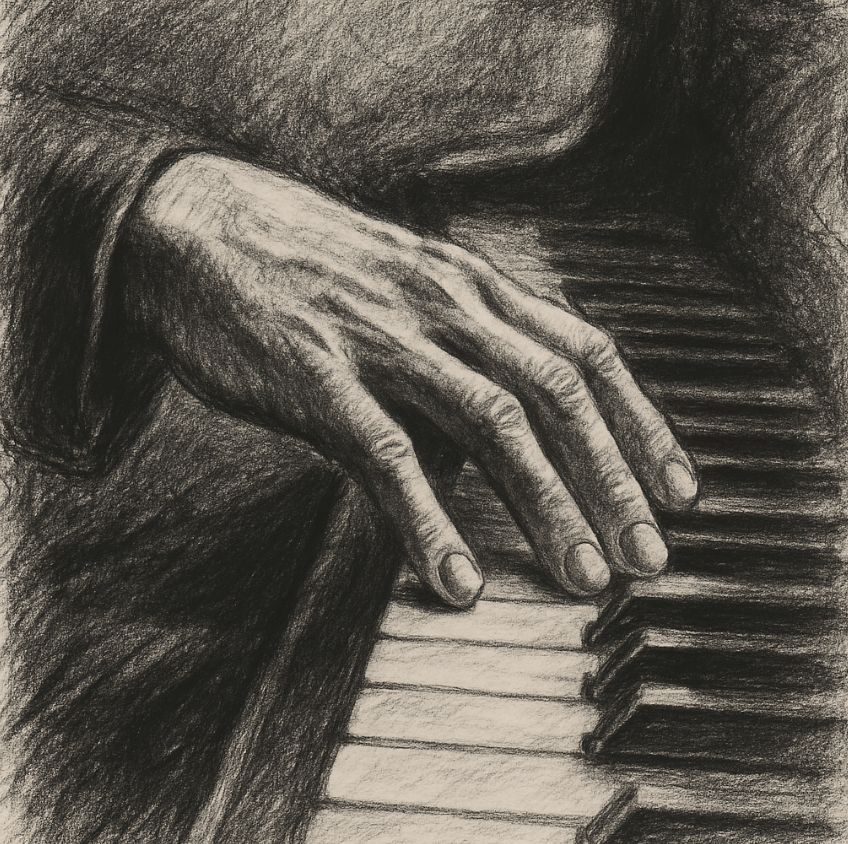
It was against this background that, one cold evening, the capital city of Bulgaria, Sofia, hosted a concert by arguably the greatest pianist of the era, Sviatoslav Richter. During the recital, the 44-year-old Richter played “Pictures at an Exhibition” by Russian composer Modest Mussorgsky. One audience member surreptitiously tape-recorded the performance. And thankfully so: Many consider it to be the most inspired performance of the century. It’s breathtaking.
When you listen to it, two things are striking.
The first is that everyone is coughing. This was clearly not a professional recording, because it’s peppered with the sounds of people hacking their lungs out. Bulgaria was very sick.
But perhaps more interestingly, if you listen carefully, you notice that, during select passages in the performance—especially those parts that are most emotional and powerful and intense, something even stranger occurs.
No one is coughing.
It was as though Richter, through the nimble work of his hands, was able to—for just a moment—take the suffering people of Bulgaria outside of themselves, outside of their pain, and into a world far better than the one they seemed to be inhabiting.
* * * * *
What’s the purpose of an economy? Or perhaps more fundamentally: Why do we work?
One answer is that it enables us to meet our material needs. No work, no money, no food. Without food we die. Plain and simple.
If we go a little deeper, we can say that we work to exercise our minds. If there isn’t a concept to learn or a task to challenge us, tedium sets in, our minds atrophy, and worries begin to multiply. We go crazy. So work helps us fulfill our basic material and psychological needs.
But suppose you had more wealth than you could ever spend and enough Sudoku puzzles or piano lessons to keep your mind challenged for eternity. Would you still want to work then? If you were, say, Sviatoslav Richter, and you could spend 12-hour days refining your craft in a state of hypnotic ecstasy, would you be content there? In other words, could you work like Richter without giving the concert?
I certainly couldn’t, and I think it’s because there’s a deeper reason still for our desire to work: love.
By “love,” I don’t mean that feel-good emotion. I mean the unsentimental kind, that sort of genuine selflessness whose primary aim is to better another person’s life. That’s what all good work ultimately does: it takes away some form of suffering. Therapists, lawyers, doctors, chefs, financial advisors, executive assistants, accountants, auto mechanics—what they all have in common is that, if they do their jobs with integrity, they end up carrying some of the weight of society’s burdens. When I’m away from my family, I can still see their faces and hear their voices because a bevy of engineers used their talents to create Skype or FaceTime. As the 1981 papal encyclical Laborem Exercens puts it, men and women who work “are unfolding the Creator’s work, consulting the advantages of their brothers and sisters.”
Unfolding the Creator’s work. Think of it for a moment.
Have you ever been in the presence of a true master, someone who has perfected a craft so thoroughly that, when they’re working, you can just feel their authority? I’m talking about the roofer who can identify the composition of a shingle in two seconds, the video editor who cuts clips like a samurai, the analyst who manipulates Excel like a Rubik’s cube. When they do that, they not only ease your suffering by fixing your roof, editing your film, or calculating your taxes. In a deeper sense, they give us the same thing Richter gave his audience: joy. The joy of seeing one of God’s gifts “unfolded.”
When we think of work, do we think of it as a special connection with God? Because that’s what it is: the opportunity to bring about something good for our neighbor through the efforts of our minds and bodies.
It’s as if God has given us permission to mimic Him. To become mini creators. Pope John Paul II said that we can sense in our work “some echo of the mystery of creation with which God, the sole creator of all things, has wished in some way to associate you.”
What’s the purpose of an economy? The textbooks will say that it’s the efficient production, distribution, trade, and consumption of wealth and resources in a geographic area. But if we were to travel back in time and descend upon a concert hall full of sick Bulgarians and a Ukranian pianist who played for them, we might start to come closer to the real, true answer: to unfold the work of His Creation.
 Ricky McRoskey
Leave a comment